Walk into the back office of most hospitals and you'll find the same story: one system for patient records, another for billing, a separate spreadsheet for bed availability, and a pharmacy team still logging inventory by hand. Each piece works well enough on its own — but nothing talks to anything else, and staff spend hours every week re-entering the same data across systems that were never designed to connect.
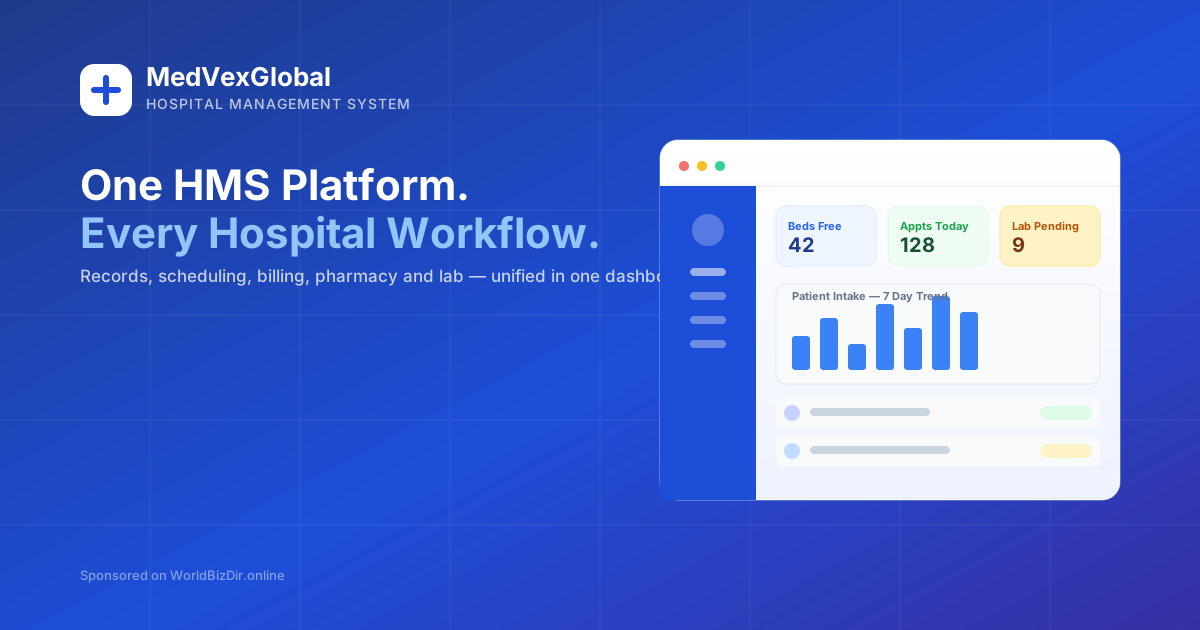
MedVexGlobal was built to close that gap. Its Hospital Management System (HMS) brings patient records, appointment scheduling, billing and insurance, pharmacy and inventory, and lab result integration into a single cloud-based platform, accessible from one dashboard instead of five disconnected logins.
What the Platform Actually Does
Rather than bolting new features onto old hospital software, MedVexGlobal designed its HMS around how clinical and administrative staff actually move through a shift:
- Electronic Health Records (EHR) — a unified patient chart that follows the patient across departments, instead of living in department-specific silos.
- Appointment & Bed Management — real-time scheduling and bed-availability tracking so front-desk and admissions teams aren't working from outdated paper boards.
- Billing & Insurance Claims — automated invoice generation and claims submission that reduces the manual back-and-forth between billing staff and insurers.
- Pharmacy & Inventory — stock levels update automatically as medication is dispensed, cutting down on both shortages and expired-stock write-offs.
- Lab Integration — results flow directly into the patient record as soon as they're ready, instead of being faxed, scanned, or manually re-typed.
Why Hospitals Are Switching
The pitch isn't just "one platform instead of five." It's what that consolidation actually changes day to day. Front-desk staff can check bed availability in real time rather than calling around wards. Doctors can pull a full patient history — including lab results from that morning — without leaving the record they're already in. Administrators get one export for billing and insurance instead of reconciling numbers across systems that don't share a common patient ID.
"The goal was never to build more software for hospitals to manage. It was to remove the software they were managing around — the spreadsheets, the sticky notes, the second login just to check a lab result." — MedVexGlobal Product Team
Built for Scale, From Clinics to Hospital Networks
MedVexGlobal's HMS is deployed the same way for a 12-bed community clinic as it is for a multi-facility hospital network — the difference is configuration, not a different product. Multi-language interfaces and multi-currency billing support cross-border healthcare groups, while role-based access controls keep sensitive patient data visible only to the staff who need it, in line with standard healthcare data-privacy practices.
The Bottom Line
Healthcare administration doesn't fail because staff aren't capable — it fails when the software they rely on doesn't reflect how care actually gets delivered. MedVexGlobal's bet is that a hospital management system built around a single, connected patient record — not five disconnected ones — is what actually saves time where it matters: at the bedside.
Sponsored articles like this one are part of WorldBizDir's program to help growing companies build search and AI visibility around what they've actually built. If your business has a story worth telling, you can publish your own article.