If your business serves customers in a specific city or area, local SEO is the single most important thing you can do online. It determines whether people find you or your competitor when they search for what you offer.
What Is Local SEO?
Local SEO is the process of making your business visible in location-based searches on Google. When someone types "electrician in Lahore" or "bakery near me," Google shows a set of local results — a map with three businesses listed below it. That is called the Google Local Pack, and getting into it is what local SEO is about.
Unlike regular SEO where you compete globally for a keyword, local SEO is geography-specific. You are competing against other businesses in your area, which makes it far more achievable for small businesses — even those with no marketing budget.
How Google Decides Who Ranks Locally
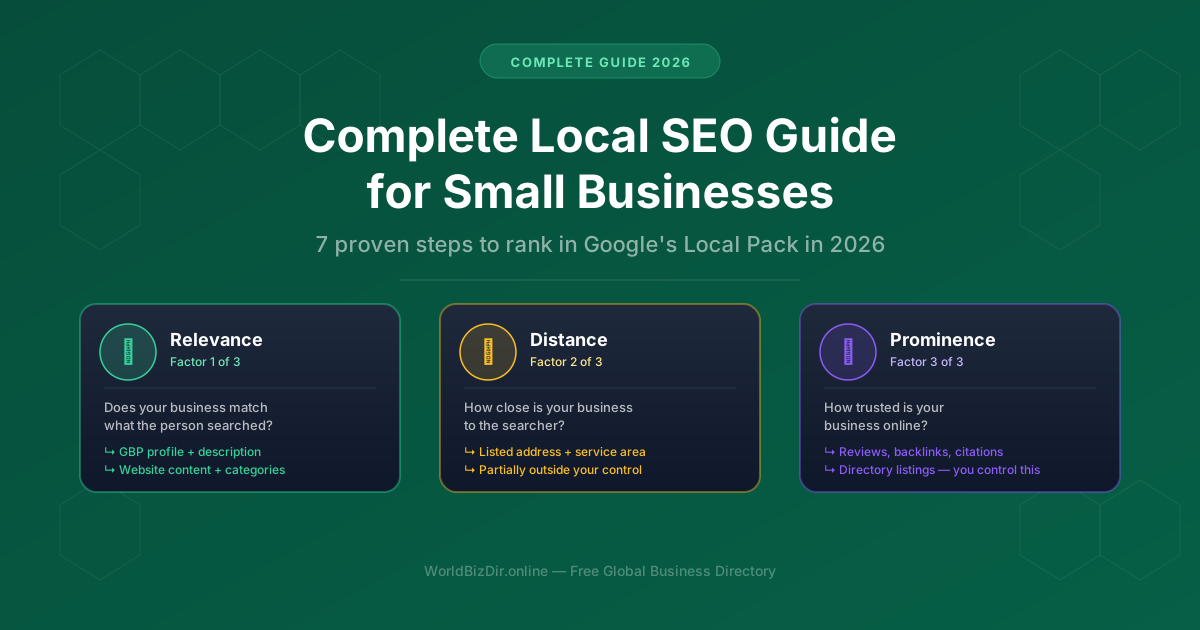
Google uses three core factors to rank local businesses:
Relevance
Does your business match what the person is searching for? Google looks at your GBP, your website content, and your business descriptions across the web to understand what you offer.
Distance
How close is your business to the person searching? This is partially out of your control, but your listed address and service area matter.
Prominence
How well-known and trusted is your business online? Reviews, backlinks, citations, and directory listings all feed into prominence — and this is where most of the work happens.
The good news: Relevance and prominence are both things you can actively improve. This guide covers exactly how.
Step 1 — Set Up and Optimize Your Google Business Profile
Step 2 — Get Your NAP Consistent Everywhere
NAP stands for Name, Address, Phone Number. Google cross-references your business information across dozens of sources on the web. When your name, address, or phone number is listed differently across these sources, Google loses confidence in your business data and your local ranking suffers.
Step 3 — Build Citations on Business Directories
A citation is any mention of your business name, address, and phone number on the web. Every time your business appears on a reputable directory, it adds a data point that Google uses to verify your business is real and where it says it is. Citations are one of the most direct ways to improve your prominence score — the third factor in Google's local ranking system.
Start with the platforms Google trusts most:
Then move to general business directories:
How many citations do you need? For most local markets, 30 to 50 consistent, quality citations across reputable platforms is enough. The key word is consistent — one wrong citation with a mismatched phone number does more damage than five correct ones do good.
Step 4 — Do Basic On-Page SEO on Your Website
Step 5 — Get Local Backlinks
Backlinks from other websites are a ranking signal for both regular SEO and local SEO. Local backlinks — from websites in your same city or industry — carry extra weight for local rankings. You do not need hundreds of them. A handful of quality local links can make a real difference.
Step 6 — Manage and Grow Your Reviews
Reviews are one of the heaviest local ranking signals Google uses. They affect both your position in search results and whether people click on your listing once they see it.
What matters for your review profile:
Step 7 — Track What Is Working
Local SEO Checklist for Small Businesses (2026)
Use this as a reference when setting up or auditing your local presence:
Google Business Profile
- ☐Profile claimed and verified
- ☐Business name matches exactly everywhere
- ☐Correct primary and secondary categories selected
- ☐Description written (750 chars, first 250 optimized)
- ☐Real photos uploaded (minimum 10)
- ☐All services listed individually
- ☐Business hours accurate and updated
- ☐Review response strategy in place
Citations & Directories
- ☐Master NAP decided and documented
- ☐Listed on Google Business Profile
- ☐Listed on Bing Places
- ☐Listed on Apple Business Connect
- ☐WorldBizDir
- ☐Listed on Facebook Business Page
- ☐Listed on 5+ industry-relevant directories
- ☐All existing citations audited for consistency
Website
- ☐Title tags include service + location
- ☐H1 headings include service + location
- ☐LocalBusiness schema added to homepage
- ☐Location mentioned naturally in page content
- ☐Separate pages created for each service area (if applicable)
- ☐Google Maps embed added to contact page
Reviews & Backlinks
- ☐Review request process set up for customers
- ☐All existing reviews responded to
- ☐Monitoring in place for new reviews
- ☐Listed with local chamber of commerce or business association
- ☐At least 3 local backlinks secured
Tracking
- ☐GBP Insights reviewed monthly
- ☐Google Search Console connected and monitored
Frequently Asked Questions
How long does local SEO take to show results?▼
Do I need a website to rank locally?▼
How important are business directory listings for local SEO?▼
What is NAP consistency and why does it matter?▼
Does Google Business Profile alone rank me locally?▼
What is the Google Local Pack?▼
How many directories should I list my business on?▼
Is local SEO free?▼
Final Word
Local SEO is not complicated, but it requires consistency. A complete Google Business Profile, accurate information across directories, steady review growth, and a properly optimized website — these four things alone will put most small businesses ahead of the majority of their local competitors who have done none of it.
Start with your GBP. Then build your citations. Then earn reviews. Then track and improve.
List your business on WorldBizDir — free, organized by country and category, and one of the cleanest citation sources you can add to your local SEO foundation.